Honey Mango: A Serif Font for Elegant, High-Quality Design Projects
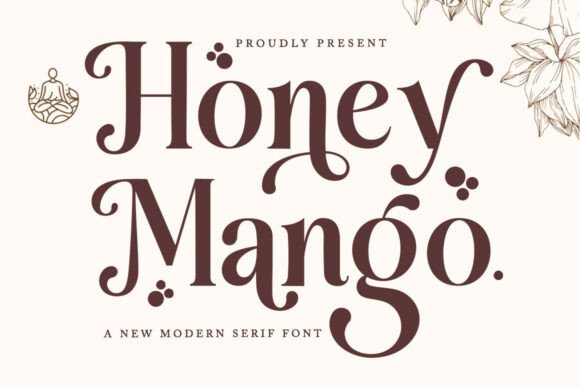
In the world of design and typography, the font you choose is a foundational decision that influences the entire tone, readability, and perceived quality of your project. A typeface isn't just a collection of letters; it's a voice. Honey Mango is a serif font that speaks with an elegant, clean, and sophisticated voice, making it a valuable asset for a wide range of creative and professional workflows. It is expertly designed to be a true favorite, offering the potential to elevate your creative ideas from simple concepts to polished, high-end executions.
Understanding where a specific font like Honey Mango fits into your process is key to using it effectively. It is not a universal solution for every task, but rather a specialized tool designed for projects that require a touch of femininity, glamour, and classic style. Its sleek and highly readable nature, combined with luxurious letter connections, makes it particularly suitable for applications where aesthetics and clarity must coexist. This is a font for when the message itself needs to feel beautiful and intentional.
Defining the Honey Mango Aesthetic
Before integrating any new asset into your workflow, it’s crucial to define its core characteristics. Honey Mango is a high-quality serif font, which immediately places it in a category associated with tradition, authority, and elegance. However, its specific design leans into modern sensibilities. It is described as sensual, glamorous, and feminine, which sets it apart from more rigid or conservative serif fonts like Times New Roman or Garamond.
This unique personality makes it ideal for a specific set of use cases. Think of projects where the goal is to create an emotional connection or convey a sense of luxury. This includes, but is not limited to:
- Branding and Identity: Logos for boutiques, beauty brands, high-end consultants, or lifestyle blogs.
- Event Stationery: Wedding invitations, save-the-dates, and event programs where a romantic and classic feel is desired.
- Print and Packaging: Labels for artisanal products, restaurant menus, magazine headlines, and book covers, especially in genres like romance, fashion, or lifestyle.
- Digital Content: Website headers, social media graphics, and digital advertisements that need to stand out with a touch of class.
By identifying these applications upfront, you can mentally catalog Honey Mango as a go-to option for projects that fit this profile, saving you time during the conceptual and selection phases of your work.
Integrating Honey Mango into Your Creative Process
A smooth workflow depends on knowing when and how to introduce new elements. Honey Mango can be integrated at several key stages of a project, from initial planning to final production.
During the Planning and Conceptualization Phase
When you are mood-boarding or outlining a new project, the font choice can help define the visual direction. If a client brief calls for a "classic, romantic, and upscale" feel, Honey Mango should be on your shortlist for consideration. Including it in initial mockups can help secure client buy-in early, as it provides a tangible representation of the intended aesthetic. This proactive approach prevents costly redesigns later in the process.
During Execution and Design
This is where Honey Mango truly shines. Its practical features are designed to streamline the design process itself. One of its most significant advantages is that it is PUA-encoded (Private Use Areas). For a designer, this is a critical workflow feature. It means that every single glyph, including all the stylish alternates and special strokes, is fully accessible in any standard design software, such as Adobe Illustrator, Photoshop, or InDesign. You don't need to rely on complex OpenType panel features that may not be supported everywhere. You can simply copy and paste the characters you need from a character map, ensuring you have full creative control over every letterform.
The font’s extensive character set further enhances its usability during execution. It includes:
- Complete Basic Set: Uppercase and lowercase letters, numbers, and punctuation provide the foundation for any text.
- Stylistic Alternates: A number of alternative letters are included, allowing you to customize the look of words and create unique typographic compositions. This is perfect for logos or headlines where a standard letter might not have the desired flair.
- Multilingual Support: This is a non-negotiable feature for any professional working with international clients or audiences. It ensures your message is communicated clearly and correctly, regardless of the language.
When pairing Honey Mango with other fonts, consider its role. As a display or headline font, it pairs beautifully with a clean, simple sans-serif font for body text. This contrast creates a clear visual hierarchy, allowing the elegance of Honey Mango to make an impact without sacrificing the readability of longer paragraphs. For example, a wedding invitation might use Honey Mango for the couple's names and a font like Lato or Montserrat for the event details.
After Project Completion: Quality Control and Archiving
The clean and highly readable design of Honey Mango contributes to a smoother quality control process. Because of its clear letterforms and logical connections, it is less likely to cause legibility issues in print or on screen. When you hand off files to a printer or a client, you can be confident that the typography will render as intended. This reduces the back-and-forth of proofs and revisions, making your workflow more efficient.
Furthermore, investing in a high-quality font like Honey Mango is an investment in your long-term asset library. It becomes a reliable tool you can return to time and again for projects that require its specific blend of classic and modern elegance. Organizing your font library with tags like "elegant," "serif," "wedding," or "feminine" can help you quickly retrieve it when the right project comes along.
Practical Implementation Tips for Optimal Results
To get the most out of Honey Mango, a few practical considerations can make a significant difference in the final outcome of your project.
First, experiment with the alternates. Don't just settle for the default letters. Open your character map or glyphs panel and explore the different versions available for key letters. Swapping out a standard 'a' or 'g' for a more stylistic alternate can completely change the personality of a word, giving you a more customized and intentional result.
Second, pay attention to kerning and tracking. While Honey Mango is well-designed, you may need to make minor adjustments to the spacing between letters (kerning) or the overall letter-spacing (tracking) for specific applications, especially in large headlines. Tightening the tracking slightly can create a more compact, luxurious feel, while loosening it can enhance readability for smaller text.
Finally, consider the context of use. A font's appearance can change dramatically based on its size, color, and background. Test Honey Mango at the size it will be viewed at. See how it looks in a dark color on a light background versus a light color on a dark background. This testing phase is a small but crucial part of the implementation process that ensures the final product is not only beautiful but also perfectly suited to its medium.
In conclusion, Honey Mango is more than just a beautiful serif font; it is a versatile and practical tool for creators who value elegance, quality, and efficiency. Its thoughtful design, comprehensive character set, and PUA encoding make it a seamless addition to any professional workflow, allowing you to confidently produce stunning invitations, branding, packaging, and more. By understanding its strengths and integrating it thoughtfully into your process, you can ensure it consistently helps you achieve your creative and business goals.